Field notes
Writing on product, AI & the craft of shipping
Lessons pulled straight from the products we build.
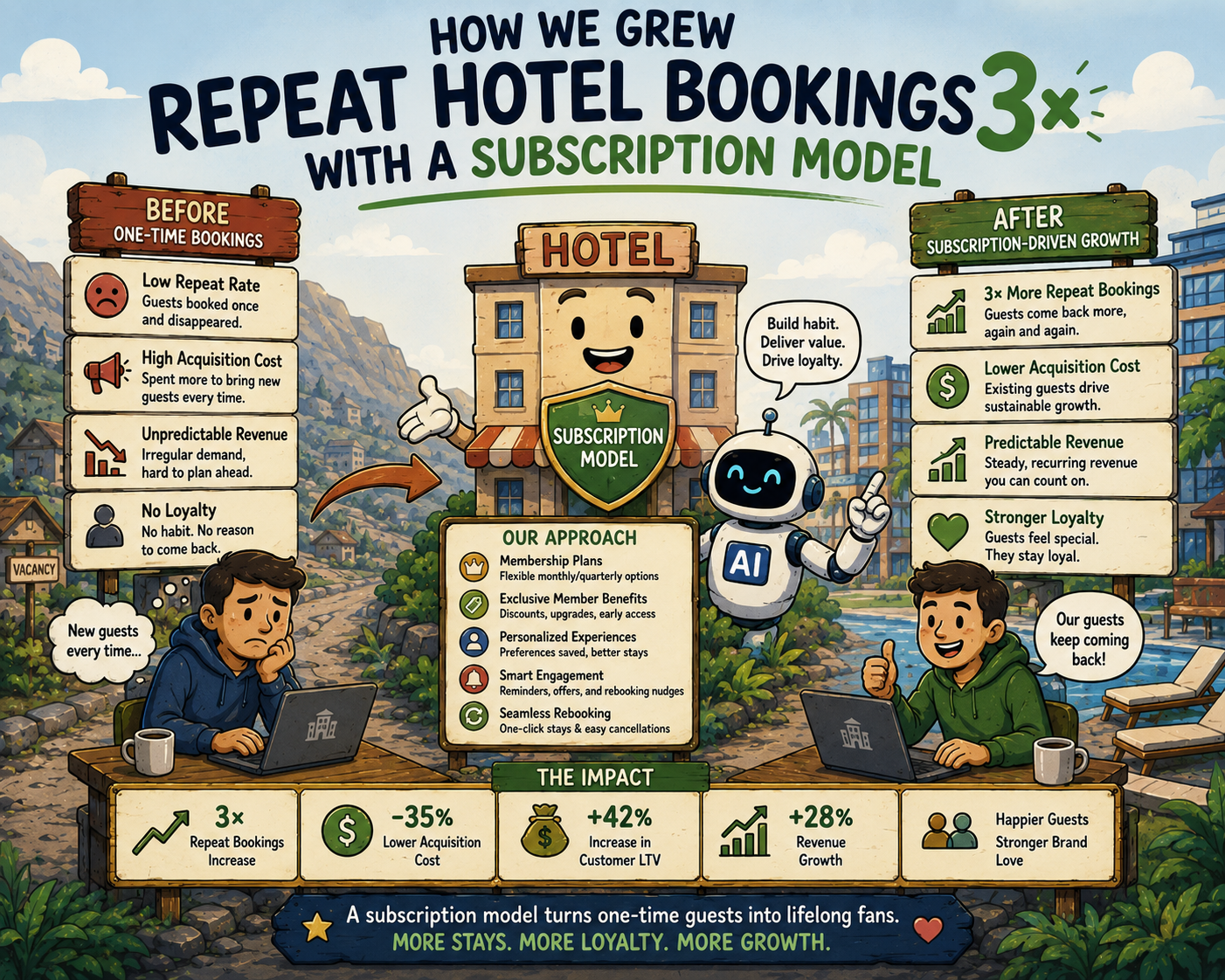
How we grew repeat hotel bookings 3× with a subscription model
A teardown of Tripsxing — why a subscription layer beat one-off bookings for retention, and how we designed it to grow repeat bookings threefold in year one.
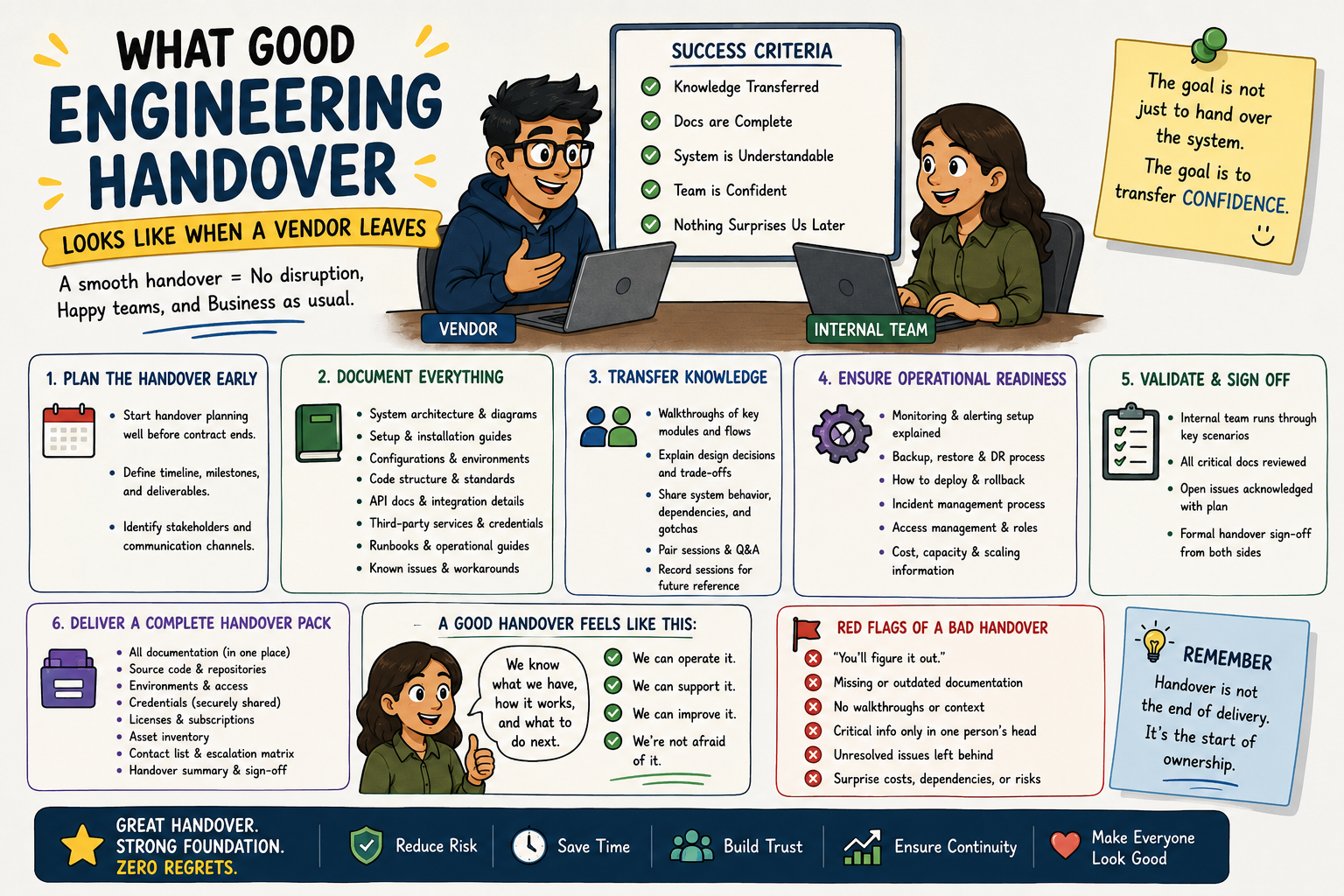
What good engineering handover looks like when a vendor leaves
The real test of a development partner is what remains after they're gone. A practical guide to taking ownership of software someone else built — the six steps, the documents that matter, and the red flags that mean you don't own it yet.
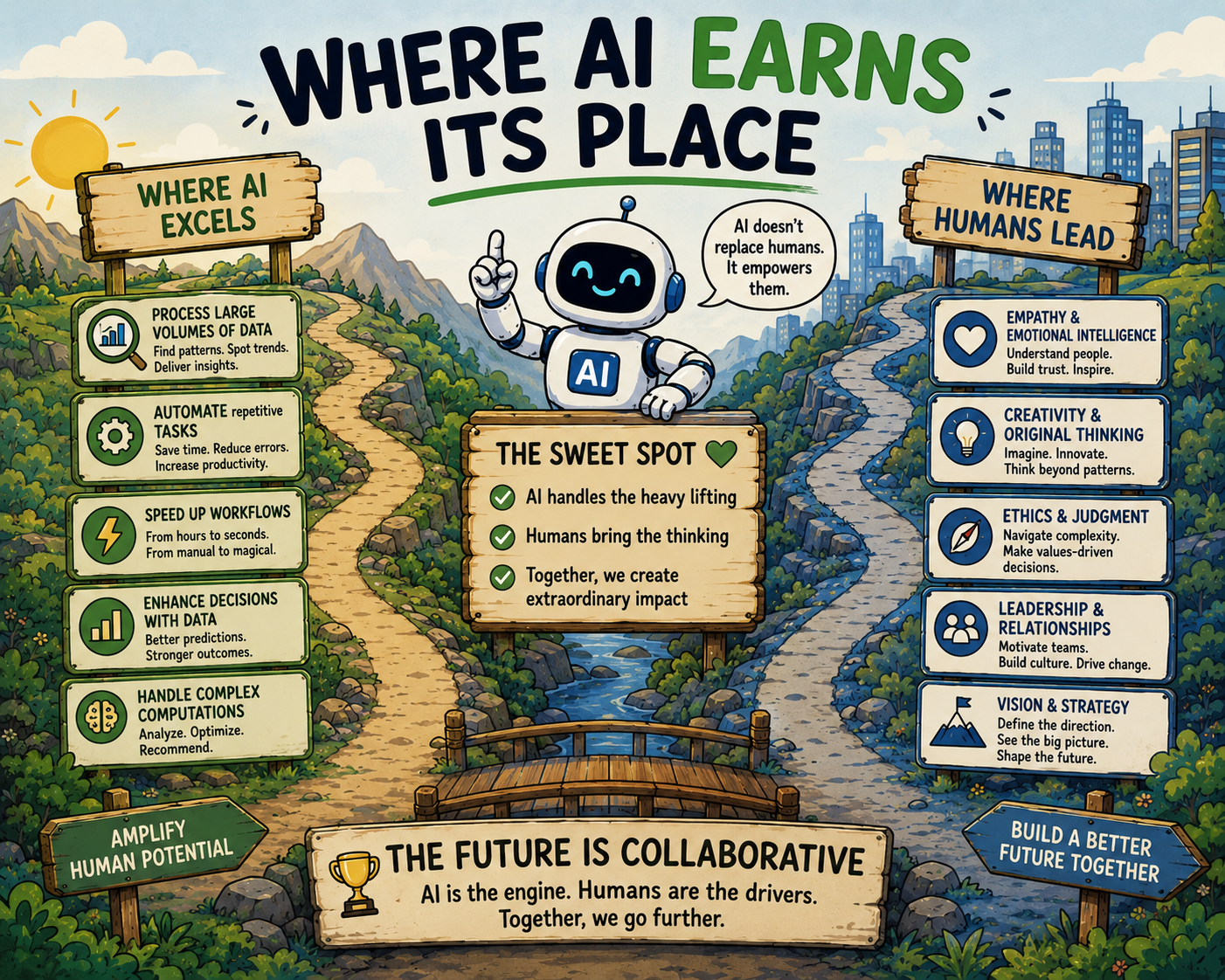
Where AI actually earns its place in a product (and where it doesn't)
A practical framework for deciding when to add AI to a product — the use cases that pay off, the ones that don't, and how to tell them apart before you build.
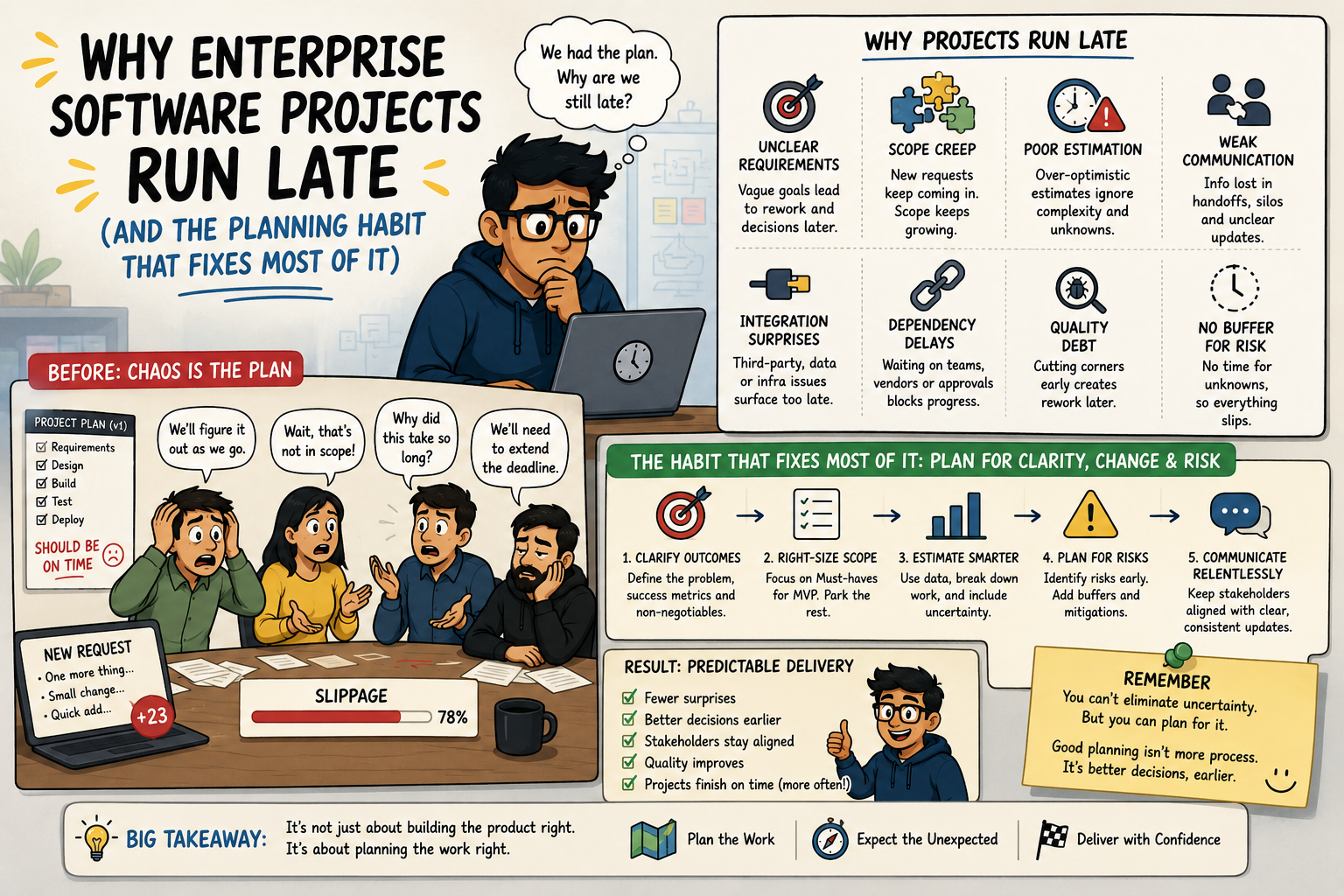
Why enterprise software projects run late (and the planning habit that fixes most of it)
Late software projects aren't an engineering failure — they're an estimating failure. The predictable places schedules slip, and how to plan for reality instead of hope.
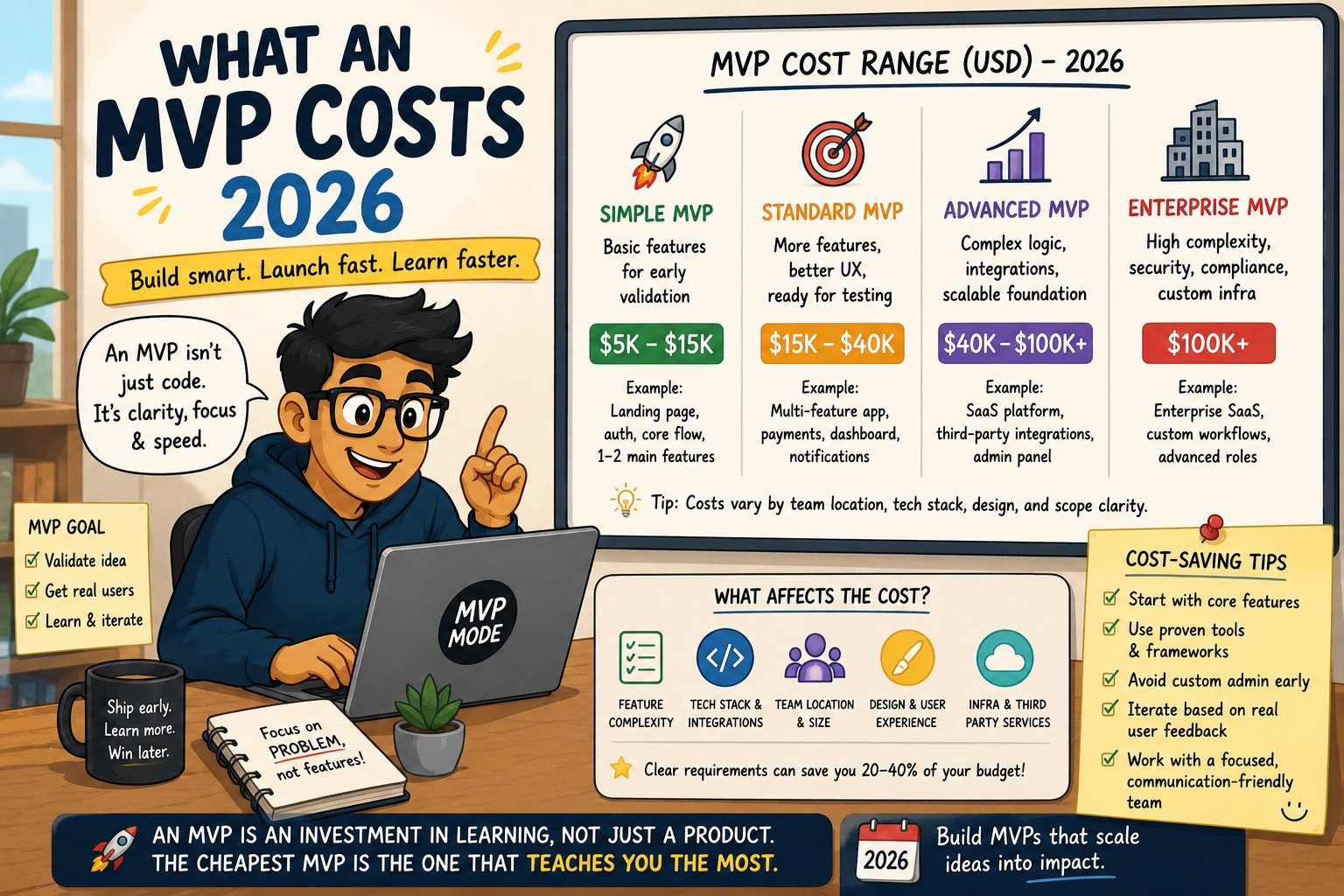
What it actually costs and takes to build an MVP in 2026
An honest breakdown of MVP budgets, timelines, and the trade-offs behind them — so founders can plan with real numbers instead of guesses.
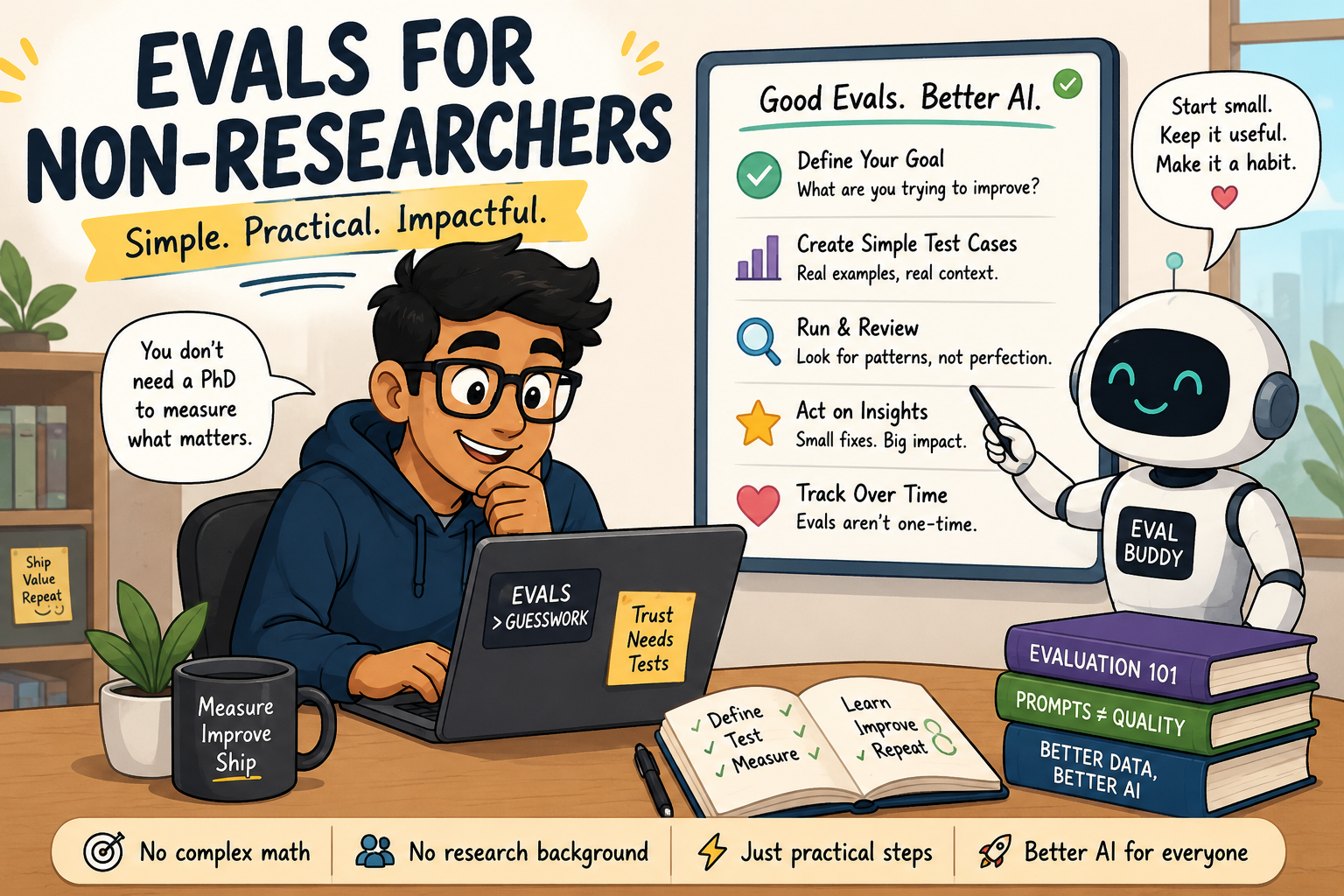
How to evaluate an AI feature before you ship it (evals for non-researchers)
You don't need a research team to test an LLM feature properly. A practical, data-backed guide to building a small evaluation suite that tells you if your AI actually works — with real-world examples of what happens when teams skip it.
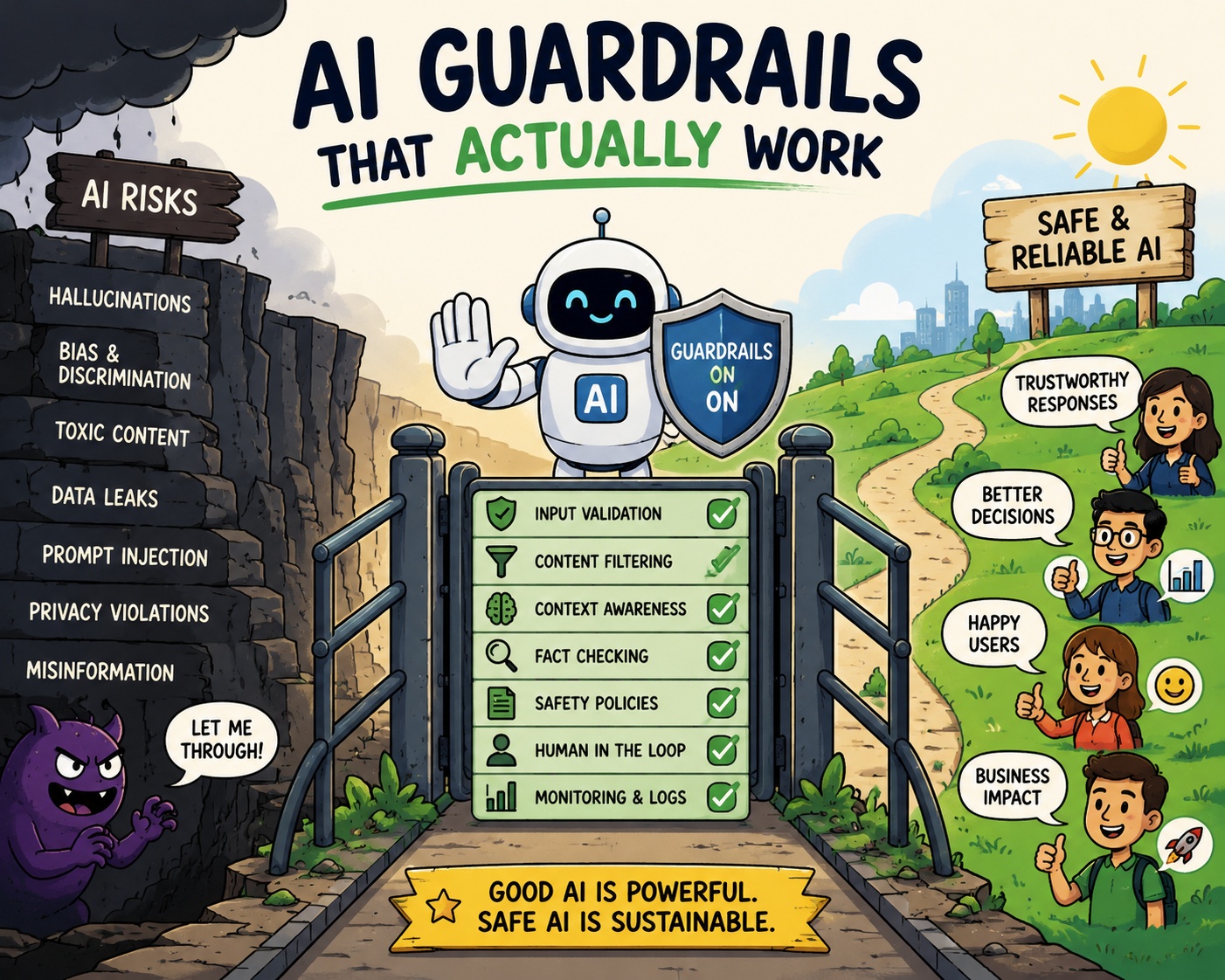
AI guardrails that actually work
Practical patterns for keeping LLM features from embarrassing your brand — input checks, output validation, scoped permissions, and knowing when to say 'I don't know'.